

Network Assessment Statistics
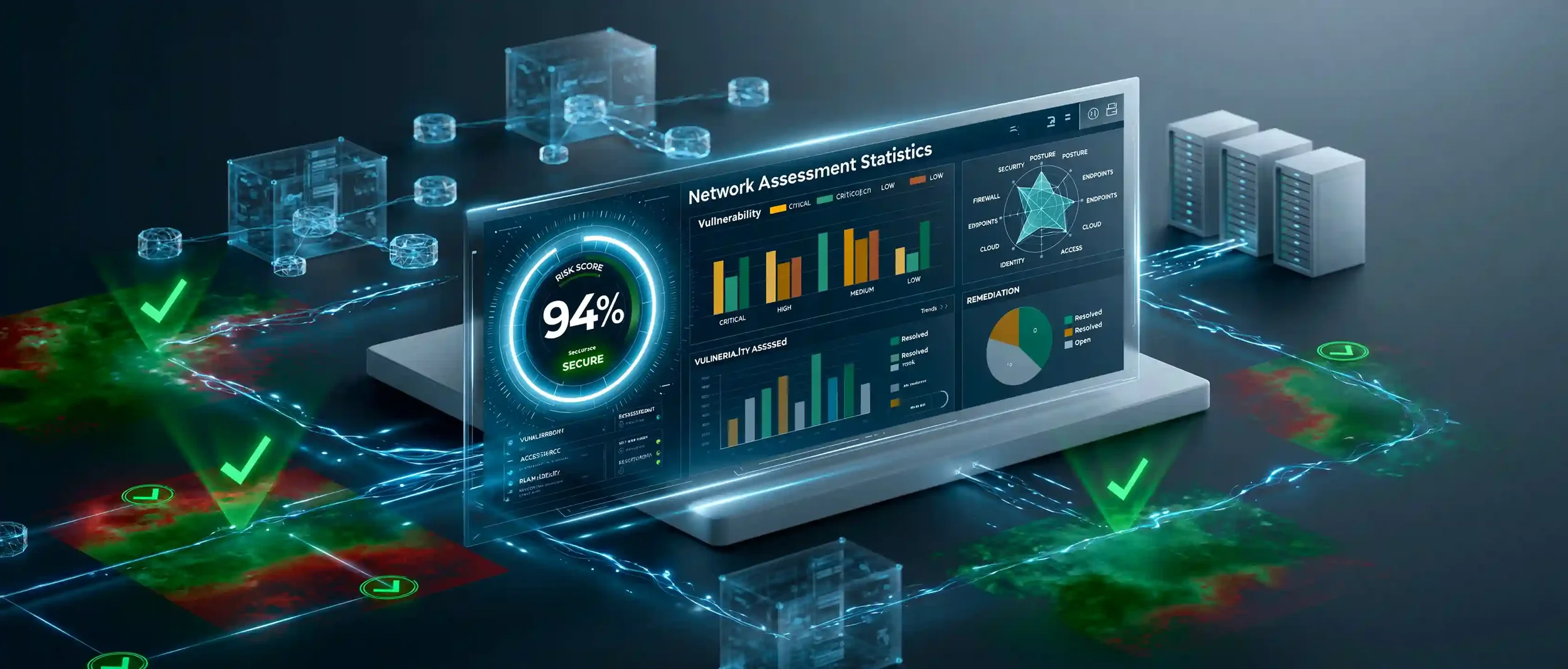
If you run a business in Knoxville, Oak Ridge, or anywhere across East Tennessee, you already know the drill: there’s always something demanding your attention. The last thing you want is another fire drill because something in your network gave out. Yet here’s a number worth paying attention to: according to Verizon’s 2026 Data Breach Investigations Report, exploitation of vulnerabilities has climbed to the top initial access vector, accounting for 31% of breaches.
That’s more than stolen credentials. More than the classic phishing email. Attackers are walking through doors left cracked open—doors a proper network assessment would have found and helped you close.
Why These Stats Matter More Than Ever
Think about it this way: every year, new vulnerabilities keep climbing. In 2025 alone, a record 48,185 CVEs were published. That’s roughly 131 weaknesses disclosed every single day. No internal team, no matter how sharp, can manually track and patch all of them while also running the business.
Real-world assessment data tells the same story. Edgescan’s 2026 Vulnerability Statistics Report—built from thousands of security assessments and penetration tests—found that more than 20% of internet-facing vulnerabilities were rated critical or high severity. For larger organizations, roughly 37% of vulnerabilities discovered over a 12-month period remained unresolved. And when penetration testers go looking, they routinely find exploitable paths in the vast majority of networks they test.
These aren’t theoretical risks. They’re the weaknesses that turn into the 31% of breaches we’re seeing right now. Network assessments (vulnerability scans + ethical penetration testing) are controlled “breach discovery” exercises. They show you where an attacker could get in—before the attacker does.
It’s Not Just About Compliance Anymore
For healthcare practices, financial services firms, schools, retailers, and government contractors, the stakes are even higher. Regulatory requirements often demand regular assessments anyway. But even if they didn’t, the downtime, lost productivity, and cleanup costs from a breach are brutal. One weak spot in your network, or a misconfigured remote access point, can be the difference between business as usual and a very expensive recovery project.
What a Real Network Security Assessment Actually Includes
A good assessment isn’t a scary black-box exercise. Here’s what it typically covers:
External and internal vulnerability scanning to surface known weaknesses.
Configuration reviews (firewalls, remote access, wireless, etc.)
Penetration testing that simulates how a real attacker would chain vulnerabilities together
Checks for unpatched systems, weak credentials, and risky exposures
A prioritized remediation roadmap written in plain business language—not just a list of CVEs
Compliance considerations tailored to your industry (e.g., HIPAA, data protection rules)
The goal isn’t to hand you a 47-page report you’ll never read. Instead, it’s to give you clear visibility and a practical plan.
The Local Advantage
At Solomon IT, we’ve helped businesses across Oak Ridge, Knoxville, and all of eastern Tennessee stay ahead of these issues since 2015. We know the local landscape—hybrid work setups, multi-site retail operations, healthcare compliance needs, and the realities of running a growing organization without a huge internal IT team. Our approach is straightforward: we find the gaps, explain them without the jargon, and help you fix what matters most.
Here’s the honest truth: waiting until something breaks is the most expensive “strategy” out there. A regular network security assessment lets you fix problems on your schedule instead of reacting when a breach occurs—or when the compliance auditor shows up.
If your last real network check-up was more than a year ago—or if you’ve never had one done—reach out to Solomon IT today. We’ll walk you through where you stand and what steps make sense for your business. No pressure, no scare tactics, just clear answers and a partner who actually shows up when you need us.
Because in 2026, being proactive about your network isn’t just smart IT. It’s smart business.